Turanga Restoration Project & Predator-Free Whitford
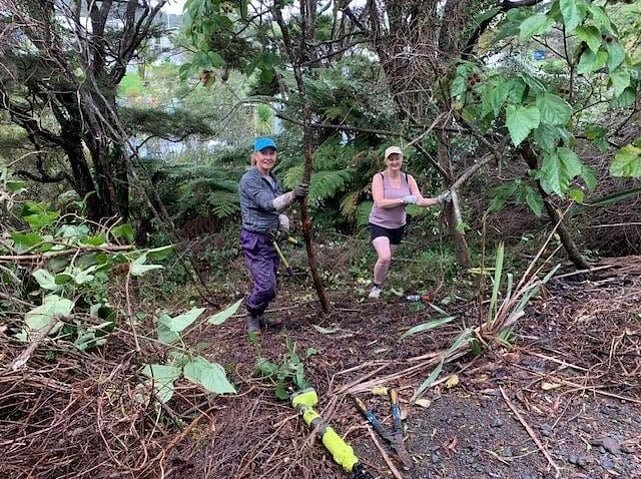
Growing concern in Whitford about the unchecked spread of pest plants, especially woolly nightshade, along road corridors, public reserves, and private properties, has prompted a community to work together to find a solution.
First they sought education, enlisting the help of Auckland Council’s biodiversity Officer, Kelly Wootten. Inspired and equipped with practical tools and knowledge to tackle pest plants effectively, Predator-Free Whitford continued the momentum and identified key areas on public land where targeted action could make a real difference.
One of those areas, the Potts Road Trail on the Clifton Peninsula, is now the focus of a regular community working bee. What began as a simple callout has grown into a grassroots movement. Every Saturday at 9am, a group of dedicated volunteers gathers at the grassy verge near 64 Potts Rd. Armed with gloves, loppers, and even the occasional chainsaw, they tackle invasive plants like woolly nightshade, gorse, privet, and jasmine, clearing the way for native regeneration and the return of biodiversity. Every week brings new faces alongside regular legends, like Kate and Chris, who show up rain or shine. Whether someone can spare an hour or commit regularly, each contribution helps rebuild the health of this ecosystem.
And the transformation is already visible: large swathes of pest plants have been removed. The cleared spaces will soon be replanted with hardy native plants that restore habitat for birds, lizards, and insects.
This work isn’t just about aesthetics, it’s ecological restoration:
Space is freed for native plants to thrive – the team is now working around a stunning mature Tōtara, previously smothered by invasive species.
Wildlife returns as natural habitats and food sources are re-established.
Soil health improves, supporting long-term stability.
Biodiversity increases, making the area more resilient to pests, disease, and climate shifts.
This community-led model, practical, inclusive, and hands-on, shows great promise for scaling across Franklin. It demonstrates what’s possible when local knowledge, passion, and action come together to protect and enhance our environment.