Using bait safely to protect our communities, pets and wildlife
Rat and possum control plays an important role in protecting Aotearoa's native wildlife, plants and ecosystems. Toxic bait can be an effective part of pest control, alongside trapping and other methods, but it needs to be handled and used carefully.
This guide is for people using rat or possum bait supplied through the Predator Free Franklin initiative, supported by Te Ara Hīkoi.
Always read the product label before using bait and follow the label instructions. If the instructions on the product you have received differ from this guide, the product label takes priority.
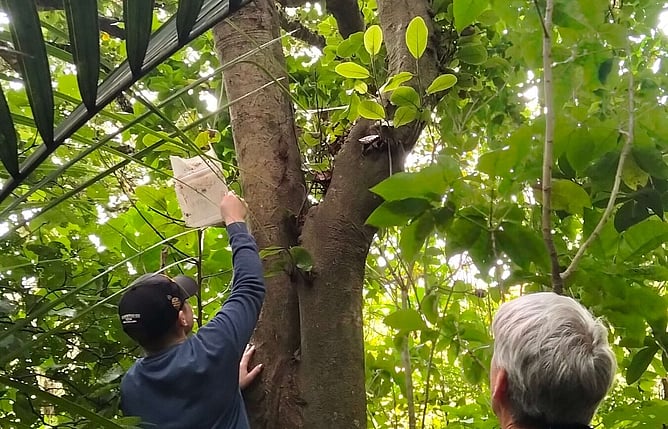
The five most important rules
- Wear gloves when handling bait.
- Keep bait away from children, pets, livestock and non-target wildlife.
- Use a suitable bait station where the product label requires or recommends one.
- Track your bait placement in trap.nz and check bait stations regularly.
- Never allow dogs, cats, livestock or other animals to access bait.
Why use a bait station?
Bait stations help contain the bait and reduce the chance of children, pets and othernon-target animals coming into contact with it. They also help protect bait from rain,moisture and other environmental conditions.
Some products must be used in bait stations. Always check the label for the product youare using and follow its specific instructions.
Bait stations should be placed where your target pests are active, while being positionedso that children, pets and livestock cannot access them.
Which bait station should I use?
A bait station helps keep bait contained and reduces the risk of people, pets and otheranimals coming into contact with it. The right station depends on where you are placing itand what animals you need to keep away from the bait.
We generally recommend:
- Philproof bait stations: position these off the ground and away from dogs and toddlers.
- Pied Piper bait stations: these are designed to be placed on the ground.
Always follow the instructions supplied with your bait station and the bait product label,and check the station regularly.
A bait station is not a substitute for safe bait handling. Keep bait secure, prevent accessby children and pets, and follow the product label at all times.
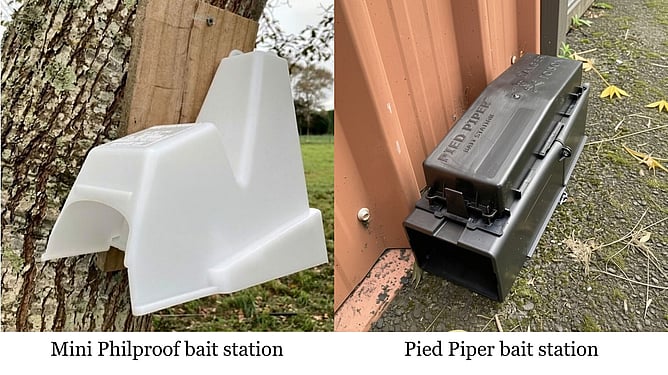
We generally recommend:
- Philproof bait stations: position these off the ground and away from dogs and toddlers.
- Pied Piper bait stations: these are designed to be placed on the ground.
Always follow the instructions supplied with your bait station and the bait product label,and check the station regularly.
A bait station is not a substitute for safe bait handling. Keep bait secure, prevent accessby children and pets, and follow the product label at all times.
Which bait? What's the difference?
Different toxic baits contain different active ingredients. They don't all work in the sameway, and they don't all have the same risks to non-target animals.
| Product | Active ingredient | Target pests | Type |
|---|---|---|---|
| Pestoff Pellets | Brodifacoum | Rats, mice, possums | Second-generation anticoagulant |
| Pestoff Rodent Blocks | Brodifacoum | Rats, mice | Second-generation anticoagulant |
| Double Tap® | Diphacinone + cholecalciferol (Vitamin D3) | Rats and possums | Combination toxicant |
| RatAbate® | Diphacinone | Rats | First-generation anticoagulant |
Brodifacoum can remain in the tissues of poisoned animals for a long time. This means dogscan be exposed if they eat rats or possums that have consumed brodifacoum bait.
Double Tap® contains diphacinone and Vitamin D3, which are metabolised more quickly thanbrodifacoum, so the risk of secondary poisoning is lower. However, Double Tap is still toxic,and dogs can be poisoned by eating bait directly or by consuming multiple poisoned animals.
Never allow dogs or other pets to access bait or poisoned animals.Remove any accessible carcasses promptly and dispose of them safely.
Important: know which Pestoff product you have
Pestoff Rodent Pellets and Pestoff Rodent Blocks contain brodifacoum and areformulated for rodent control in bait stations. Pestoff's current product information listsRodent Pellets as containing 0.02 g/kg brodifacoum.
Pestoff Rodent Bait 20R is a separate product with its own label,restrictions and approved uses. Do not assume that instructions for Pestoff RodentPellets or Blocks apply to 20R.
Always check the label for the exact product you have.
Pestoff Rodent Pellets & Blocks
What are they?
Pestoff Possum & Rodent Pellets and Rodent Blocks contain brodifacoum, a second-generationanticoagulant toxin.
The current Pestoff product information lists Rodent & Possum Pellets as containing0.02 g/kg brodifacoum and describes them as bait for use in bait stations.
Brodifacoum can persist in the tissues of poisoned animals, so care is needed to preventpets and other non-target animals from accessing bait or poisoned carcasses.
Double Tap®
What is it?
Double Tap® contains two active ingredients: diphacinone and cholecalciferol (Vitamin D3).It is used for the control of rats and possums.
Double Tap must be used in bait stations according to its product label.
RatAbate®
What is it?
RatAbate® contains diphacinone, a first-generation anticoagulant. It is designed forrat control and generally requires repeated feeding.
Follow the product instructions carefully, including directions about bait stations,placement and checking.
Protecting children, dogs, cats and livestock
Toxic bait should always be treated as a poison. Keep it out of reach of children,pets, livestock and other non-target animals.
- Never leave loose bait where children or animals can access it.
- Use a suitable bait station where required or recommended.
- Choose bait station locations carefully.
- Keep unused bait securely stored in its original packaging.
- Do not leave bait or bait stations where livestock can interfere with them.
Contact your veterinarian promptly and tell them which product or active ingredientmay be involved.
Keep the product packaging or label available so you can provide accurate information.
Handling and storing bait
Always follow the handling and storage instructions on your product label.
- Wear gloves when handling bait.
- Do not eat, drink or smoke while handling bait.
- Wash your hands thoroughly after handling bait.
- Keep bait in its original packaging and store in a dry sealed container that is preferably child and dog-proof, or if not, ensure it is stored out of reach.
- Keep bait away from food, animal feed and water.
- Never transfer bait into food or drink containers.
Where should I put my bait station?
Put bait stations where rats or possums are likely to travel or feed, while making surethe station cannot be easily accessed by children, pets or livestock.
- Look for signs of pest activity such as droppings, tracks, chew marks or runs.
- Place stations along likely travel routes.
- Keep stations sheltered where possible.
- Avoid areas where flooding or heavy rain could move the bait.
- Make sure the station is stable and cannot easily be tipped over.
- Check the station regularly.
Checking bait stations
Regular checking helps you know whether your bait is being eaten and whether yourpest-control effort is working.
- Check the bait station regularly according to the product label.
- Replace or replenish bait as directed.
- Remove old or damaged bait when appropriate.
- Check that the station remains secure and accessible to the target pest.
- Look around the station for signs of pest activity.
Record your pest control in trap.nz
Recording your bait stations and pest control activity in trap.nz helpsyou keep track of what you are doing and measure your results over time.
- Record where your bait station is located.
- Record what type of pest control you are using.
- Record bait checks and activity.
- Record catches or other observations where relevant.
- Keep your records up to date.
Dead rats and possums
Check baiting areas regularly for dead rodents and follow the disposal instructionson the product label.
Wear gloves when handling dead animals and wash your hands thoroughly afterwards.
Keep dead animals away from children, pets, livestock and other animals.
Safe disposal of unused bait
If you have unwanted or expired bait, do not simply leave it in the environment or disposeof it where children, pets, livestock or wildlife could access it.
- Wear gloves when handling bait.
- Keep unused bait in its original packaging where possible, or in a secure, clearly labelled container.
- Follow the product label for disposal instructions.
- Do not throw bait into the bush, onto the ground, into waterways or down drains.
- Dispose of empty packaging according to the product label and local waste requirements.
- Make sure discarded bait and packaging cannot be accessed by children, pets or wildlife.
If you are unsure how to dispose of a particular product, check the product label or contactthe manufacturer for advice rather than disposing of it in the environment.
If bait is spilled
- Keep children and animals away from the area.
- Put on gloves.
- Carefully collect the spilled bait.
- Follow the product label instructions for disposal.
- Wash the affected area as directed.
- Wash your hands thoroughly afterwards.
If a person may have been exposed
If you think someone has swallowed bait or has otherwise been exposed to a toxicproduct, seek medical advice immediately.
National Poisons Centre:0800 POISON (0800 764 766)
Emergency: Call 111.
Have the product packaging or label available if possible.
Protecting waterways and the environment
Toxic bait can harm non-target animals and the environment if it is not used correctly.Keep bait away from waterways, drains and areas where it could be washed away.
Always follow the product label regarding placement, use and disposal.
Baiting works best as part of a wider pest-control programme
Baiting is one tool in the pest-control toolbox. Depending on your property and your goals,you may also use traps, monitoring devices and other methods.
Regular monitoring is important. Recording your results in trap.nz can help you seewhether your pest-control efforts are making a difference.
Safe-bait checklist
Before you start
- I have read the product label.
- I know what active ingredient I am using.
- I have suitable gloves.
- I have a suitable bait station if required.
- I have chosen a safe location.
- Children, pets and livestock cannot access the bait.
After placing bait
- I have recorded the location in trap.nz.
- I know when I need to check the station.
- The bait station is secure.
- I will regularly check for pest activity and dead animals.
- I know what to do if bait is spilled or someone is exposed.
Toxic baits are different products with different active ingredients, directions andrestrictions. The product label is the most important source of information for theparticular bait you are using.
Useful resources
Need help?
If you're unsure about how to use the bait you've received, check the product label first.You can also contact Te Ara Hīkoi for help with your community pest-control project.
Remember: if the product label says something different from this guide,always follow the product label.