Friends of Te Wairoa were delighted to host a Wetland Wānanga in September, led by Dr Rebecca Eivers of Wai Kōkopu Consulting and attended by over 20 enthusiastic locals hungry for knowledge. The wānanga started with a morning education session at Hūnua Hall followed by three wetland site visits in the afternoon.
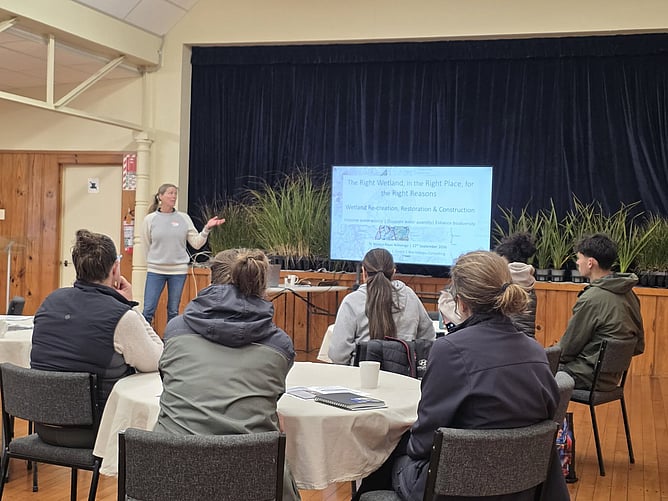
Rebecca shared her knowledge and experience of wetland restoration, re-creation and construction, with a particular focus on what this could mean for the Te Wairoa catchment.
The key message was simple:
“The right wetland, in the right place, for the right reasons.”
Rebecca explained that Aotearoa (New Zealand) has a wide range of wetland types, including bogs, fens, marshes and swamps. Each has its own characteristics, so understanding the natural conditions of a site is important when deciding how best to restore it. Looking at historical wetland maps, soils, water flows and the catchment’s history can also help us understand where wetlands once existed and where there may be opportunities to bring them back.
For Te Wairoa, there is considerable potential to expand wetland restoration throughout the catchment. Wetlands play an important role in improving water quality, reducing the effects of flooding and providing habitat for native fish and wetland birds.
Three main approaches were discussed:
Constructing treatment wetlands to help remove pollutants such as sediment, nitrogen, phosphorus and bacteria.
Restoring existing swamps, seepages and springs, often starting with something as simple as excluding stock and allowing native sedges, grasses and rushes to regenerate. These areas can slow water flows, filter water and help reduce nutrients and sediment entering our streams.
Re-wetting riparian and floodplain wetlands, which can improve water quality, hold back floodwaters and provide valuable habitat for native fish, birds and other wildlife.
Rather than waiting for large-scale projects, a small tennis court-sized wetland can be a useful starting point. Over time, many small projects build a network of wetlands across the catchment. Together, we make a difference.
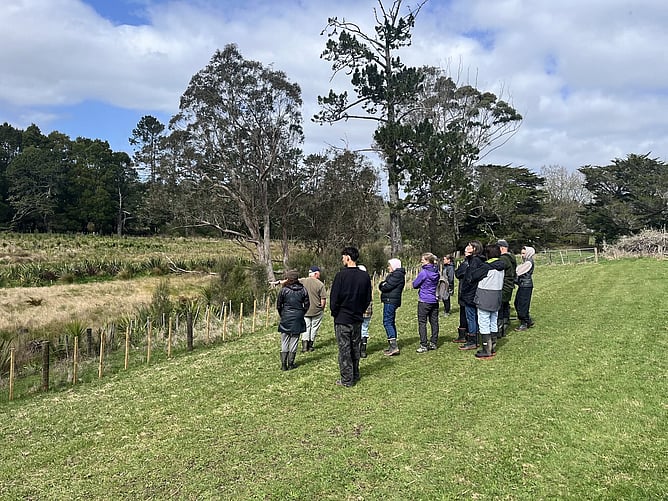
With their minds full of new knowledge, participants spend the afternoon visiting wetlands and restoration projects in Hūnua and Clevedon, including around Ōtau Ridge. What a awesome opportunity to see first-hand what can be achieved and discuss how some of these ideas could be applied in the Te Wairoa catchment.
Rebecca provided great insight into the types of plants that should be used, especially ‘sedges for edges’ meaning planting the immediate river banks with various eco-sourced carex species.
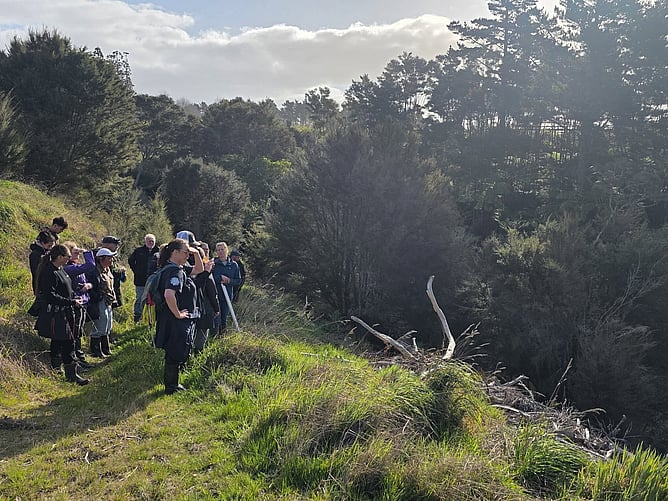
The wānanga has given Friends of Te Wairoa some practical ideas for the future. By protecting the wetlands we already have, restoring degraded areas and creating new wetlands where appropriate, we can make a real contribution to improving the health and resilience of Te Wairoa Awa (river), while also creating better habitat for our native species.
And it doesn't have to start with a large-scale project. Every wetland protected, every degraded area restored and every small project that helps slow and filter water contributes to a healthier catchment. Together, these efforts can make a big difference.
Interested in exploring wetland restoration on your property or in your community? For further advice and information on funding opportunities, contact Friends of Te Wairoa Regeneration Coordinator, Chris Marshall at regeneration@tewairoa.org.nz