Small steps you can take to bring more tūī to your backyard
“5:30am — and the tūī outside my window just went off. I thought I’d set it for later.”
Our ruru started up at 9:30pm the night before.
Is there no peace in this place?!"
Actually… no. And I’m loving it.
When you start hearing ruru at night and tūī at dawn, you know something good is happening. Your neighbourhood is becoming a little more alive.
If you’re wondering how to bring more tūī — and maybe kererū, pīwakawaka and other native birds — into your own backyard, there is a pretty simple recipe:
Food + Safe places to nest + fewer predators.
By Charles J. Sharp - Own work, from Sharp Photography, sharpphotography.co.uk, CC BY-SA 4.0, https://commons.wikimedia.org/w/index.php?curid=154300951
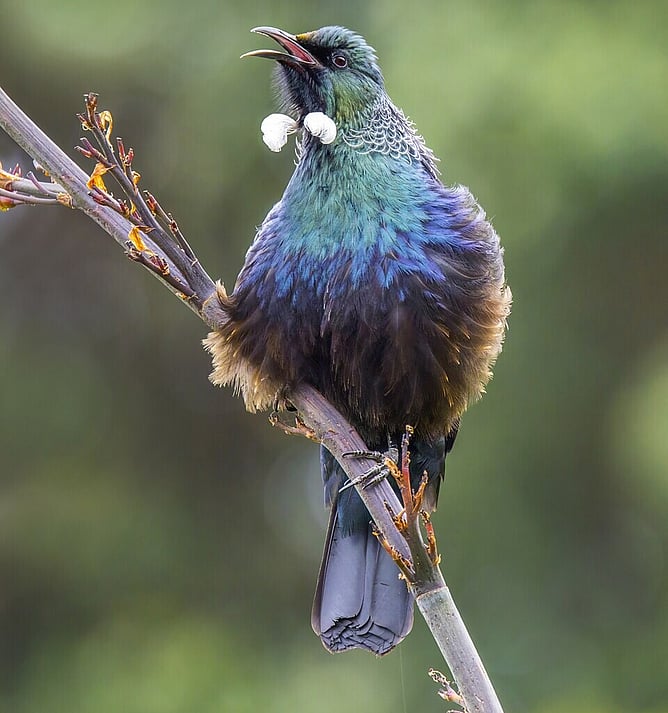
1. Feed them with trees, not feeders
Tūī are nectar specialists, so one of the best things you can do is plant the trees and shrubs that naturally feed them.
Think kōwhai, pūriri, rewarewa, rātā, pōhutukawa and harakeke (flax). Different plants flower at different times, so a variety of species can provide food throughout the year.
And don't forget that a good bird habitat is more than a few flowering trees. A layered mix of groundcovers, shrubs and taller trees provides nectar, fruit, seeds, insects, nesting sites and shelter — supporting a whole community of native wildlife, not just tūī.
And for now, trees really are better than bird feeders.
With avian influenza (H5N1) an increasing concern, avoiding bird feeders is a sensible way to reduce the congregation of birds in one place and the potential spread of disease.
We know feeders are fun. Watching birds flock to them from your kitchen window is pretty special. But our native birds need their own healthy, natural food sources — and a little more space from each other.
By NZGeo.com
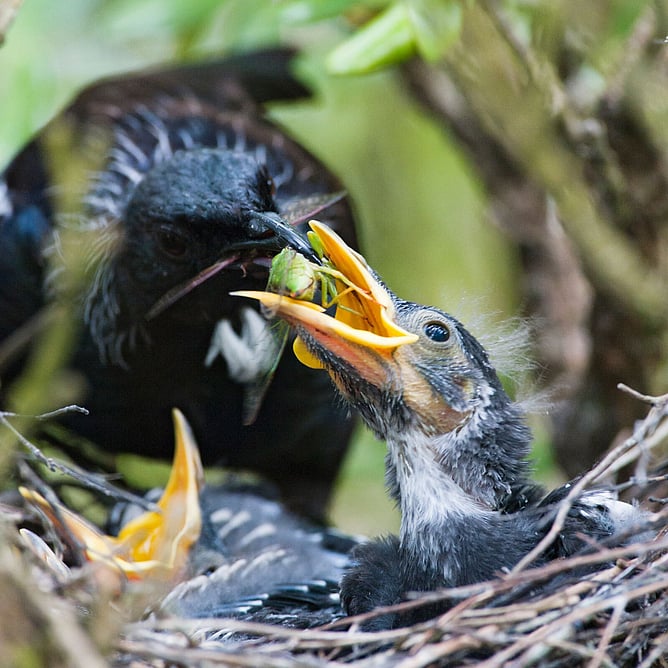
2. Give them somewhere safe to nest
Trees for the win. 🌿
Tūī generally nest from September through January, with nesting activity peaking from November into January.
The female builds a shallow nest high in the canopy, usually laying two to four eggs. Incubation takes around two weeks, followed by another three weeks or so before the chicks leave the nest.
That means there is a five- to six-week window when eggs and chicks are particularly vulnerable.
Tūī need taller trees for nesting, dense shrubs and understorey for cover, and — importantly — somewhere a little untidy.
That scruffy corner of the garden you haven't got around to tidying?
Keep it.
Young tūī can spend time close to the ground when they first leave the nest, learning to fly and find food. Dense vegetation gives them somewhere to hide while they figure things out.
And that is when predators can cause serious damage.
Make your property a safe place to raise a family
Tūī and other native birds are remarkably observant. A property that looks and feels safe is more likely to become a place they return to.
If you have cats, keeping them indoors at night is one of the simplest things you can do.
It gives birds a better chance of using your garden, especially during the breeding season, and it also reduces the risks to your cat.
Think of it as turning your property from a drive-through into a destination.
Pied Piper bait stations are available from your local community group, such as The CREST.

3. Control predators — especially rats and possums
In unmanaged areas, only about 29 per cent of tūī nests successfully fledge young. Ship rats and possums are the main killers. Stoats, ferrets, and cats add to the toll.
This is where your tūī-friendly garden becomes part of something much bigger! Planting food and providing habitat is important, but if predators are taking the eggs and chicks, the birds won't get the chance to build a population.
Predator control works best when it is sustained through the breeding season, especially November to January. Start before nesting — late winter and early spring — and keep going.
A pied piper bait station with bait will zero the ship rats around your favourite Tui trees.
If you're already trapping or baiting, trap.nz is a great way to keep track of what's happening on your property and see the bigger picture of predator control across your neighbourhood. While you're at it - do a 5 minute bird count, set a benchmark and watch bird numbers increase over time, with your efforts.
If you're not sure where to start, you don't have to figure it out alone.
Te Ara Hīkoi supports community-led predator control across Franklin and northern Waikato, including local bait and trap initiatives, workshops and practical support through the Predator Free Franklin initiative. Find your local community group for support to get started or reach out via our contact page.
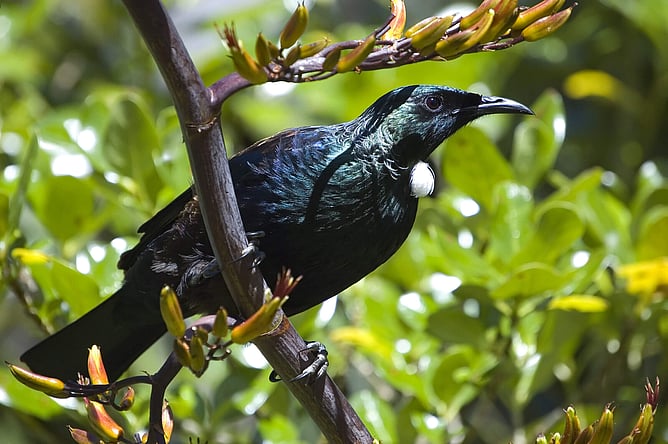
The payoff? More birds.
There is something pretty special about the moment when a bird you used to occasionally see starts becoming a regular visitor.
First you hear the tūī.
Then you start noticing where it feeds.
Then perhaps you see a juvenile in the garden.
And before long, your backyard is part of a much bigger network of habitat — connecting gardens, parks, reserves, farms and patches of native vegetation across the neighbourhood.
Food. Safe cover. Fewer predators.
Do all three and tūī don't have to be visitors.
They can become residents.
And once you've got the tūī settled in, who knows?
Maybe the kererū will follow.
Then the pīwakawaka.
And suddenly that early-morning noise isn't noise at all.
It's the sound of a neighbourhood coming back to life. 🌿
Want more native birds around your place?
Start small. Plant something that flowers. Leave a corner of your garden a little wild. Keep cats inside at night. Check your predator control.
Every backyard can contribute to a healthier, more connected landscape.
About this story
‘How To Tui’ was originally written by Paul Arthur from The CREST and published in The Greenie , October 2026 edition.